The fog is alive—and it may be scrubbing toxins from the air
We tend to think of fog as weather—something that drifts in, blurs the streetlights, and burns off by mid-morning. A new study asks us to think of it instead as a habitat: a temporary body of water, suspended in the air, where bacteria wake up, eat, and divide. And while they are at it, they appear to be quietly pulling a common pollutant out of the air we breathe.
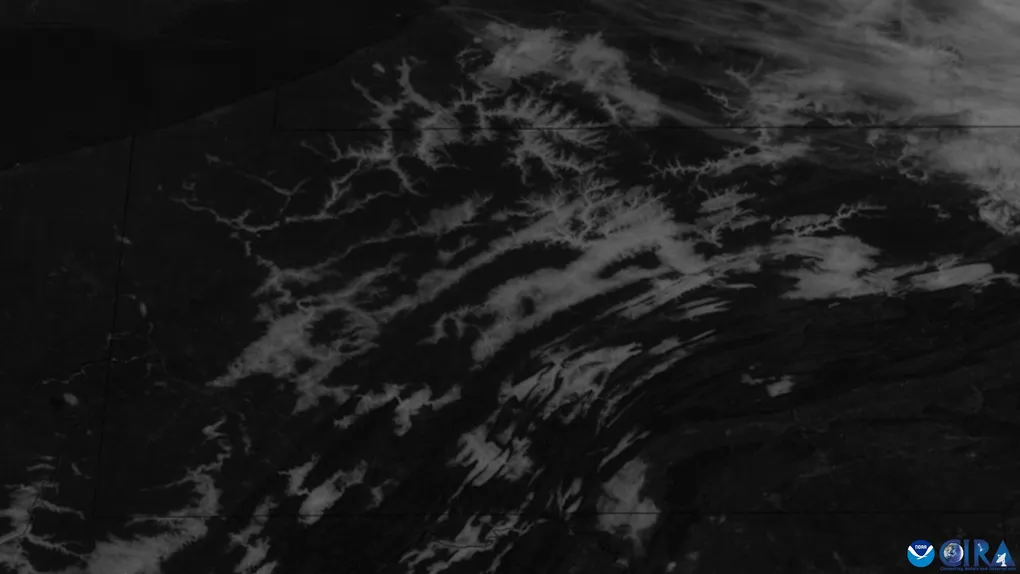
The work, published in mBio on 11 May 2026 by Thi Thuong Thuong Cao and colleagues, comes from an unusually patient field campaign: 32 separate fog events sampled over two years in the valleys of central Pennsylvania, near the Susquehanna River.
Why radiation fog was the right place to look
Scientists have long known the atmosphere carries bacteria—thousands to millions of cells per cubic meter. The hard question is whether those microbes are actually doing anything up there, or just hitchhiking in suspended animation between the soil and the next surface they land on.
The trouble is that clouds and most fogs blow through. By the time you sample the same patch twice, the air has moved on, so you can never be sure you are watching the same population change over time.
The team got around this by studying radiation fog—the kind that forms on still, cool nights when the ground chills the air just above it and water vapor condenses in place. Because the air barely moves, the researchers could sample the same parcel before, during, and after a fog formed. To do it, they pulled foggy air through a collector, condensed the droplets back into water, and then waited—sometimes more than five hours—for the fog to clear so they could sample the very same air again.
The evidence that something is growing
Three things stood out, and together they are hard to explain without life actively at work.
- The fog water was crowded. Droplets held bacterial concentrations on par with a nutrient-rich lake or seawater—and a community distinctly different from the dry air around it. One group dominated: Methylobacterium, pink-pigmented bacteria that specialize in eating simple, single-carbon compounds.
- Fog made bacteria multiply. Air sampled right after a fog event contained on average 45% more bacteria than the same air beforehand—a jump that, in nearly still conditions, is difficult to pin on anything but in-place growth.
- The cells looked like they were growing. Bacteria in the droplets were several times larger than their counterparts in dry air, and a higher fraction were caught in the act of dividing. “We observed them under the microscope to see that, yes, the bacteria are getting bigger and they’re dividing, so there is growth,” Cao told ASU News.
The toxin-scrubbing twist
The most striking result concerns formaldehyde—a widespread air pollutant that feeds ozone smog and harms human health. When the team incubated fresh fog water, the bacteria stripped out formaldehyde at roughly 200 times the rate previously measured in cloud water. Filtering out the microbes, or killing them, halted the activity, confirming that about 95% of it was biological.
Here is the surprising part: the bacteria were clearing formaldehyde far faster than they could possibly use it for food. At those rates, if it were all fueling growth, they would be doubling in minutes—impossibly fast. The likeliest explanation is detoxification: formaldehyde is poisonous even to these microbes, so they break it down into harmless carbon dioxide to keep their own environment livable. A survival reflex for them turns out to be a cleanup service for the rest of us.
What this does not prove
This is a genuinely new way of seeing fog, which is exactly why the limits deserve to be stated plainly.
- It is one fog type, one region. Still radiation fog over Pennsylvania farmland made clean sampling possible—but that does not yet tell us how drifting marine fog or high clouds behave.
- “Most parsimonious” is not “proven.” Larger cells, more dividing cells, post-fog population jumps—each could have an alternative explanation on its own. The growth case rests on all of them pointing the same way at once, not on a single decisive measurement.
- The atmospheric payoff is not yet quantified. That fog bacteria scrub formaldehyde in a bottle is clear. How much they matter for regional air chemistry at scale is still an open question.
- It complicates a good-news technology. Communities that harvest fog for drinking water are sometimes told it is naturally clean. This study is a caution: fog is full of bacteria, some Methylobacterium can act as opportunistic pathogens, and aggressively harvesting fog might even remove a natural detox process from the air.
Why it counts as human progress
It redraws a boundary. For most of history the atmosphere was a place life passed through, not a place life lived. Showing that fog droplets are working microhabitats expands where we look for biology—and for the chemistry that shapes air quality.
It rewards patient, low-tech ingenuity. No new satellite, no exotic instrument—just a clever choice of fog, a fan, a collector, and the discipline to wait out the same air parcel for hours. Some of the best science still comes from looking carefully at something everyone else walked past.
It turns a nuisance into a lead. Formaldehyde scrubbing in the sky is the kind of natural service worth understanding before we disrupt it. Knowing it exists is the first step to not breaking it—and maybe, one day, to learning from it.
Primary sources
- Paper: Cao et al., mBio (2026), DOI 10.1128/mbio.00463-26
- Institution release: ASU News — “The fog is alive”
- Summary: Phys.org coverage
The next time fog settles into a valley at dawn, picture it not as empty mist but as a fleeting pond in the sky—briefly alive, and quietly tidying the air before it lifts.
Drafts may be assisted by AI. Every published article is reviewed and edited by a named member of our staff before publication.